
Follow Kevin Janiec on LinkedIn
Every high-earning couple I work with has said something like this: “We just had an expensive month.”
I took the liberty of making myself a calendar of common reasons.
- January: Holiday credit card bills
- February: Club sports dues. Summer camp deposits.
- March: Spring sports gear. Spring break trips.
- April: Landscaping project. College visits.
- May: Memorial Day weekend. Travel sports tournament.
- June: Summer camps begin. Girls’ weekends. Golf outings.
- July: Family shore vacation. Golf trip. The kids running up the snack bar tab on our member number.
- August: Back-to-school shopping. Fall sports registration.
- September: A 40th birthday celebration. New tires.
- October: Fall weekends away. Halloween. Home improvement projects.
- November: Holiday shopping. Thanksgiving travel.
- December: Holiday parties. Family experiences. Winter vacation.
Then January comes back around, and the list starts over. That’s the fun, isn’t it? We know life is expensive, and these one-off items really aren’t as surprising as our budget makes them seem.
This does highlight the issue, though, with how most people plan their spending and cash flow. A monthly budget handles predictable bills well. But those infrequent, lumpy expenses also tend to compound as you say yes to more things.
A Cash Flow Roadmap Gives Every Month a Plan
High-income families keep having expensive months because irregular-yet-predictable spending never makes it into the monthly budget. But we’ve found it’s less about predicting those expenses and more about establishing a healthy savings rate that leaves some space for them.
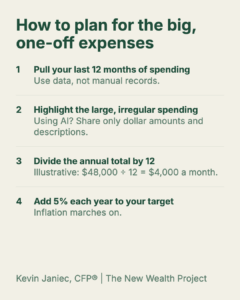
Here’s an exercise I like to do with couples running into this challenge.
- Pull your spending over the last 12 months.
- If you have an app that tracks spending, great!
- Sometimes we back into annual spending by taking income – taxes – additional contributions to savings/investment accounts
- Look at your annual spend and divide by 12.
Let’s say you spent $48,000 on one-time expenses last year. $4,000 a month should be built into your monthly “budget.”
Structure Lets You Enjoy the Life You’re Building
With these expenses built into the plan, I like to focus more on savings rates:
- 8% toward retirement
- 6% for near-to-medium term savings (brokerage)
- 4% for kids’ future (529s, etc)
With these savings rates established, we help clients answer
- How much should I be putting into retirement vs. college savings vs. brokerage accounts? How should it be invested?
- How should we fund that basement renovation we want to do?
- Could you help us align cash flow with our bonus and vesting dates?
The families we work with earn well and work hard. They want to enjoy the life they’re building without wondering whether they’re doing the right things with their money for the long term.
If you’d like to see more about how we do this for families like yours, you can check it out here.
Not intended as a recommendation or offer of any specific advice or services. All investments carry risk, and past performance does not guarantee future results. For detailed information about our fees, services, and background, please view our regulatory disclosure materials on the SEC Investment Adviser Public Disclosure Website (https://adviserinfo.sec.gov/firm/summary/170478).